About Proportional Pressure Valves
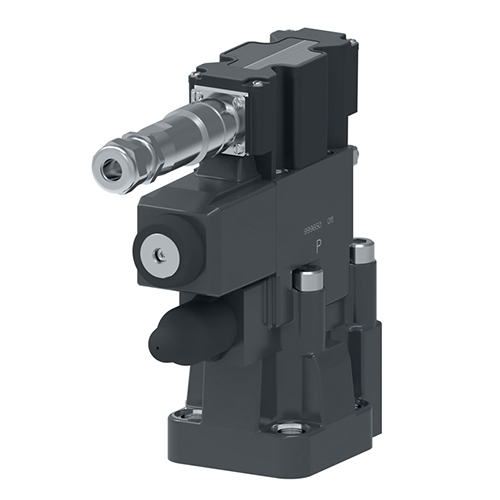
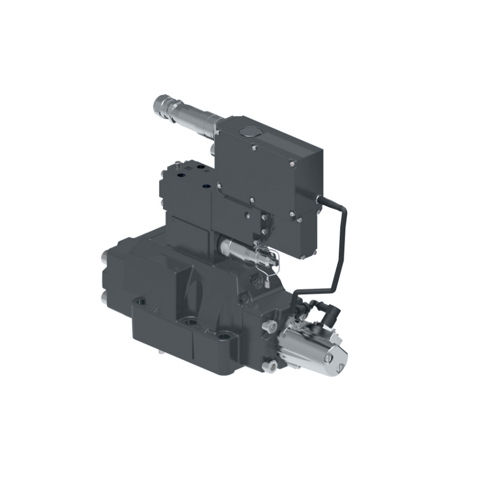
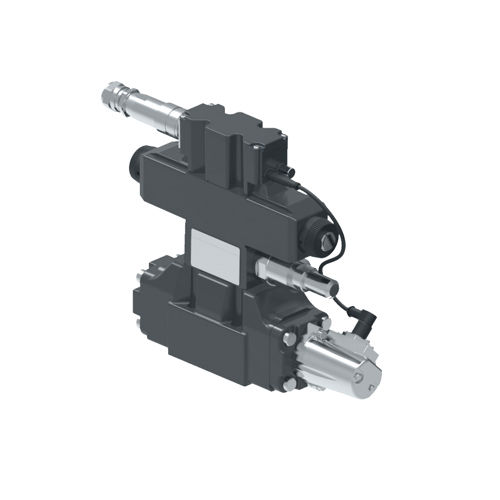
Consists of monitoring points that are visible to the user and makes modifications simple.Within the limits of the valve, Vickers by Danfoss pressure reducing/relieving valves are three-way valves that, independent of system pressure or flow, give a controlled output pressure as a function of electric current. These valves can handle pressures of up to 350 bar [5,000 psi] and flows of up to 400 l/min [106 US gal/min]. Other uses for these valves include pilot signal to a directional control valve, clutch or brake pressure control, and single-acting cylinder position control (e.g., combine header height control).- AR-06-2-A, AR-08-2-A, ISO 4401 size 3
- Pressure: up to 5,000 psi, or 350 bar
- 400 l/min [106 US gal/min] is the maximum flow.
Features and benefits
- Available both with and without OBE or non-OBE onboard electronics
- Outstanding consistency and reliability in performance
- Installation is made easier and consistent functioning is guaranteed by the self-bleeding design.
- Onboard ramp modification that permits on-site fine-tuning
- 7-pin electrical mating connections that are dependable and durable and make it simple for test equipment to access
- Selecting pressure ranges
Applications
- Machining and metal forming
- Hydraulic presses
- Injection and blow molding Mobile machinery for construction and other applications
- Pulp, paper, and wood processing
- Marine/offshore
- Oil and gas
Our Proportional Pressure Valves employ sophisticated technology to deliver dynamic and accurate control of hydraulic pressure. This ensures your systems function optimally, reducing wear and protecting sensitive components. The valves' ability to automatically adjust opens up new levels of operational reliability for various industrial environments.
Quality Materials and ConstructionCrafted from premium alloy, these valves provide exceptional durability and resistance to corrosion and tough industrial conditions. The strong build not only enhances lifecycle but also minimizes maintenance requirements, making them a smart investment for your hydraulic infrastructure.
FAQ's of Proportional Pressure Valves:
Q: How do Proportional Pressure Valves function in hydraulic systems?
A: Proportional Pressure Valves regulate hydraulic pressure by adjusting the flow and maintaining the desired pressure level, ensuring smooth and consistent performance in industrial applications.
Q: What are the primary benefits of using alloy Proportional Pressure Valves?
A: The use of high-quality alloy makes these valves durable, corrosion-resistant, and well-suited for demanding industrial environments, which enhances longevity and operational reliability.
Q: When should I use a pressure reducing hydraulic valve in my system?
A: You should use a pressure reducing hydraulic valve when you need stable downstream pressure, to protect sensitive equipment, or to enhance system safety in industrial hydraulic setups.
Q: Where are these Proportional Pressure Valves commonly installed?
A: These valves are typically integrated into industrial hydraulic machinery and equipment where precise pressure control and regulation are critical for performance and safety.
Q: What is the process for maintaining these hydraulic valves?
A: Routine inspection for leaks, cleaning external surfaces, and periodically checking functional calibration ensure optimal performance and extend the valve's service life.
Q: How does the valve's standard size benefit industrial users?
A: A standard size simplifies integration and replacement, making these valves compatible with a wide range of existing hydraulic systems and reducing downtime during maintenance or upgrades.









 Send Inquiry


 English
 Spanish
 French
 German
 Italian
 Chinese (Simplified)
 Japanese
 Korean
 Arabic
 Portuguese