About PVH and PVE open-circuit piston pumps
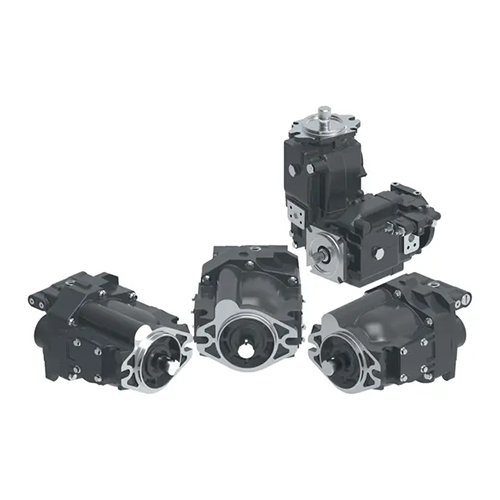
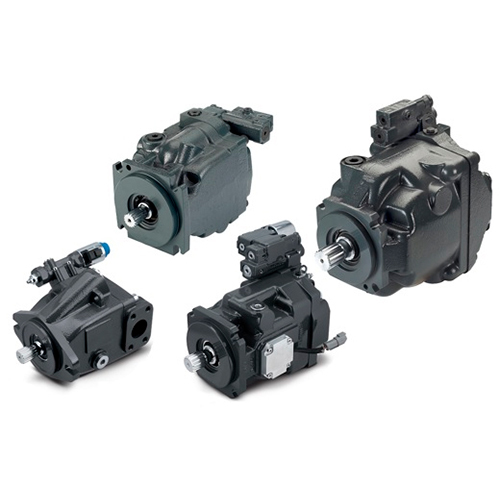
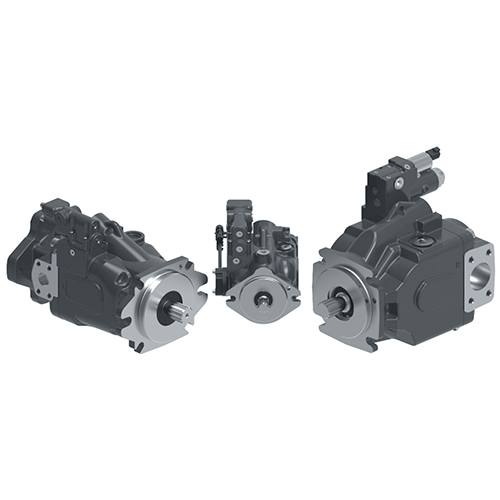
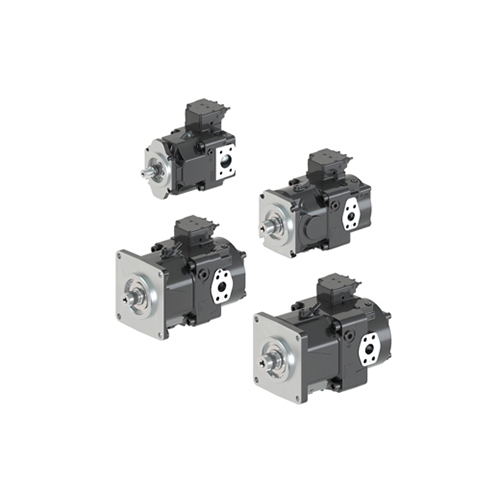
Pumps from the PVH and PVE families are made in North America to service OEM open-circuit components that need variable displacement flow. Displacements from 25 cm3 to 45 cm3 [1.54 in3 to 2.75 in3] are available in the PVE series, which is rated up to 210 bar [3,000 psi], and from 57 cm3 to 141 cm3 [3.5 in3 to 8.6 in3] in the PVH series, which is rated up to 250 bar [3,625 psi].
Features And Benefits:
- Authentic substitute for genuine OEM components
- Effective flow source to return the machine to its initial state of performance
- Proven control and component design
- Controls that are optional for optimal operational flexibility
- Standard D03 interface industrial control
Applications : Mobile open-circuit piston pumps from Danfoss are designed for a broad range of uses. Here are a few instances of typical uses for this product:Agriculture
Construction
- Backhoe and wheel loaders
- Concrete pumps
Industrial
- Marine and offshore
- Presses and extruders
Specialty
- Refuse trucks
- Airport ground support
Specifications:
| Series | Displacement
cm3 [in3]1 | Maximum pressure
bar [psi]1 | Rated speed
rpm 2 | Theoretical flow
l/min [US gal/min] |
| PVE | 25 to 45
[1.54 to 2.75] | 186 to 210
[2,700 to 3,000] | 2,400 to 3,000 | 75 to 108 [19.8 to 28.5] |
| PVH | 57 to 141
[3.5 to 8.6] | 230 to 250
[3,300 to 3,625] | 2,000 to 2,400 | 134 to 272 [35.4 to 71.8] |
1Values for shaft end pump
2Rated speed at 0 psig inlet
Engineered for DurabilityConstructed from high-grade mild steel, PVH and PVE open-circuit piston pumps are built to withstand rigorous industrial use. Their superior material choice ensures longevity and resistance to wear, maintaining performance over extended periods in challenging conditions.
Versatile Industrial ApplicationThese pumps are designed with the flexibility to serve a wide range of industrial sectors. Whether used in manufacturing, process plants, or heavy machinery, their standard sizing and robust construction allow for seamless adaptation to various operational needs.
Efficient Hydraulic PerformanceOperating at 50 Hertz, the pumps deliver consistent flow and pressure, ensuring efficient hydraulic performance. Their open-circuit design enhances system simplicity and maintenance ease, supporting reliable operation and quick troubleshooting.
FAQ's of PVH and PVE open-circuit piston pumps:
Q: How do PVH and PVE open-circuit piston pumps contribute to industrial hydraulic efficiency?
A: These pumps use a piston mechanism, enabling precise control of fluid flow and pressure. The open-circuit design streamlines hydraulic circuits, improving efficiency and simplifying maintenance for diverse industrial applications.
Q: What is the process for installing PVH and PVE piston pumps in an industrial setup?
A: Installation involves securely mounting the pump onto the machinery, connecting it to the hydraulic lines, and ensuring that the electrical power supply matches the 50 Hertz frequency. Standard sizing makes them suitable for most industrial environments, and professional support is available for integration.
Q: When is it appropriate to use PVH or PVE open-circuit piston pumps?
A: These pumps are ideal for situations requiring stable and efficient hydraulic power, such as in manufacturing, heavy equipment, and industrial automation. They perform reliably in applications demanding consistent fluid delivery and pressure.
Q: Where can I source PVH and PVE piston pumps in India?
A: PVH and PVE piston pumps can be purchased from authorized suppliers and traders throughout India. As a leading provider, we offer genuine products, technical support, and after-sales service tailored to industrial clients.
Q: What benefits do the grey mild steel construction and standard size offer?
A: The grey mild steel body delivers robustness, corrosion resistance, and ease of maintenance, while the standard sizing ensures compatibility with a wide range of industrial systems, facilitating simple integration and future scalability.
Q: How are these pumps used within industrial systems?
A: Typically, they are used to drive hydraulic fluids through machinery, powering actuators, and other components. Their reliable design supports continuous operation in demanding industrial environments.









 Send Inquiry


 English
 Spanish
 French
 German
 Italian
 Chinese (Simplified)
 Japanese
 Korean
 Arabic
 Portuguese